Recovery score

Know how recovered you are, and why.

Each morning Auralo compares last night with your own last 30 days. You get one score, the reasons behind it in plain points, and what suits the day.

  • Free
  • No account
  • Against your own normal
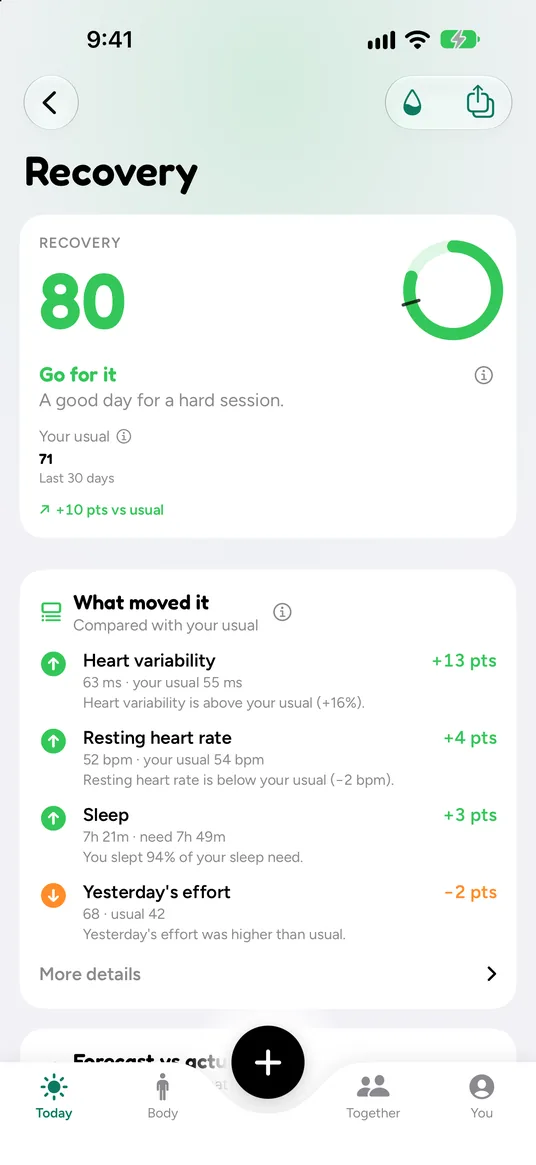
Recovery screen: 80, Go for it, a good day for a hard session, against a usual of 71. What moved it: heart variability +13 points, resting heart rate +4, sleep +3, yesterday’s effort −2.

How it works

Your normal, last night, and the difference.

  1. Step 1

    It learns your normal

    Your usual heart rate variability and resting heart rate, from the last 30 days. Never other people’s numbers.

  2. Step 2

    It reads last night

    Heart variability, resting heart rate, the sleep you got against the sleep you needed, and how hard yesterday was.

  3. Step 3

    It tells you why

    A score from 0 to 100 and what moved it, each part in points. So a low morning comes with a cause.

A clear call for the day

Recharge, Build gently or Go for it.

Every score falls in one of three bands, the same colours as the ring. Each comes with one line on what suits the day.

  1. 0–33

    Recharge

    Rest or move gently today.

  2. 34–66

    Build gently

    A moderate day suits you.

  3. 67–100

    Go for it

    A good day for a hard session.

In the app

Your morning, before you get up.

Recovery sits with last night’s sleep, so the reason is right there.

A morning brief, ready when you are

Today opens on last night’s sleep with your recovery underneath. A notification tells you when it’s ready, never during your quiet hours.

  • What moved it, first: heart variability, resting heart rate, sleep and yesterday’s effort
  • Listen to the brief, or ask Siri to read it
  • An optional mood check-in that nudges the score a little
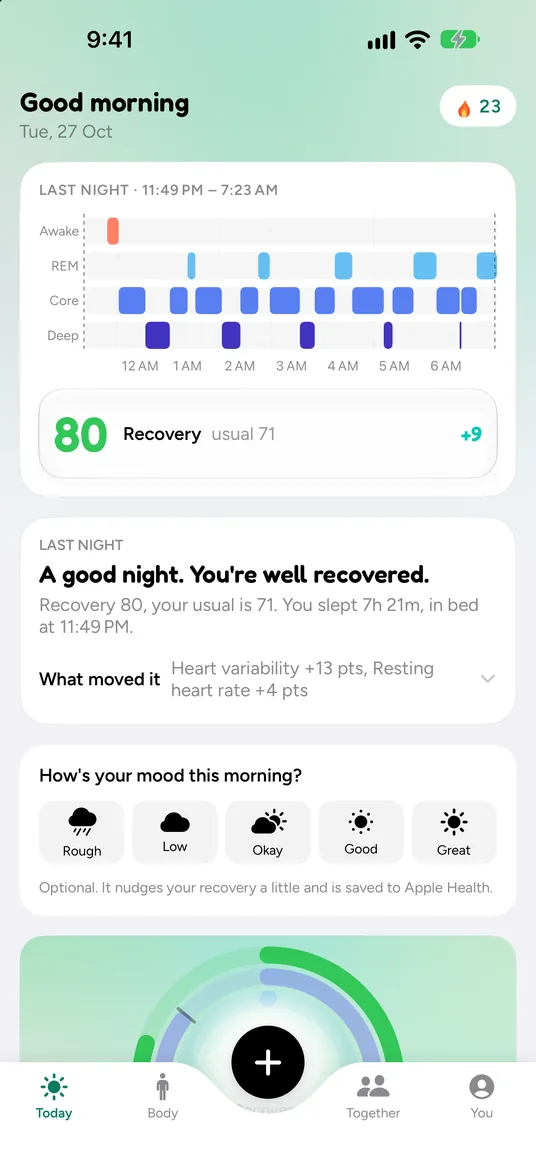
Auralo Today in the morning: last night’s sleep stages from 11:49 PM to 7:23 AM, recovery 80 against a usual of 71, and the note: A good night. You’re well recovered.

Honest when it isn’t sure

Every score says how sure it is, and why. Less data means a wider guess, and Auralo says so instead of hiding it.

  • Confidence from how settled your normal is and whether last night’s sleep was recorded
  • Tag a cold, an injury or a flight, and your normal is paused while you get back on track
  • On your Apple Watch too, with the last 7 days
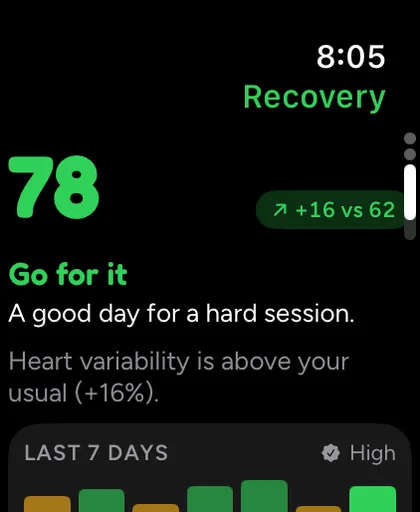
Apple Watch Recovery page: 78, Go for it, a good day for a hard session, heart variability above your usual (+16%), and a last 7 days chart marked High.

Free and Auralo+

Recovery is free. Every morning.

Auralo

$0free forever
  • Recovery score with what moved it
  • Recharge, Build gently or Go for it
  • Morning brief, read aloud if you like
  • On your Apple Watch and widgets
  • 30 days of history

Auralo+ 2 weeks free

$1.99a month, or $19.99 a year

Your full history: Trends, Activity progress and Patterns over 90 days and a year, plus PDF reports to share.

  • Everything in Auralo
  • Guided multi-week programs
  • Big day and jet lag plans

US prices. The App Store shows your local price. Cancel any time in Settings.

What Auralo+ adds

Questions, answered.

How is the recovery score worked out?

From four things, each compared with your own last 30 days: heart rate variability (45%), resting heart rate (20%), last night’s sleep against the sleep you needed (25%) and yesterday’s effort against your usual load (10%). A morning right at your usual scores about 60. If one piece is missing, the others share its weight, and the score says it’s less sure.

Why is my score low when I feel fine?

Recovery shows what your body’s signals did against your own normal, not how you feel. Look at What moved it: often one thing, like a late night or a hard day yesterday, pulled it down. If you feel fine and the reasons look small, a moderate day is a fair call. It’s wellness information, not a diagnosis.

How long until Auralo knows my normal?

It reads the history already in Apple Health, so with a few weeks of Apple Watch data it can start on day one. Without that, it says it’s still learning, and your usual firms up after about two weeks. Days you tag as illness or travel are left out of your normal.

Do I need an Apple Watch?

It’s best with one, because the Watch records heart rate variability overnight. Other wearables that sync to Apple Health work too. Fitbit shares no heart rate variability, so recovery then uses resting heart rate, sleep and effort, and says it’s less sure.

Tomorrow morning, you’ll know why.

Free for iPhone and Apple Watch. No account.

Download on theApp Store